
Menu

Research: S Mate Olah, Viki Nagy
Material: loofah

We discovered the loofah plant during our internship in Japan, where we saw it used as a cleaning sponge at the sink. Also known as the vegetable sponge, loofah is a tropical member of the gourd family. As the fruit matures, its inner fibrous structure hardens and dries out on the vine, turning into a natural sponge.
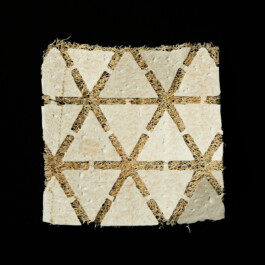
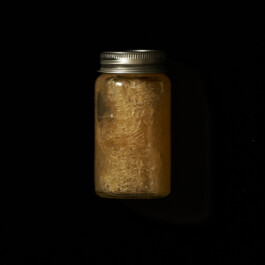
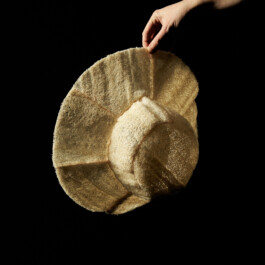
Back in the Netherlands, we began using it to wash dishes at home and in the atelier. It scrubbed well, gave off no unpleasant odours, and was compostable, hard when dry, soft when wet. We found its properties fascinating.
Loofah has been cultivated and used for centuries across the world, in Japan, China, India, Sri Lanka, Vietnam, the Philippines, Germany, Egypt, the United States, and many other regions. Its historical uses range from engine oil-filters in wartime to cushioning, footwear, food, medicine, and beauty products.
In the online archive you can learn more about our field research, read interviews with loofah farmers in Japan and explore the experiment archive that includes various techniques, dye recipes and more.

Research: S Mate Olah, Viki Nagy
Material: loofah
We discovered the loofah plant during our internship in Japan, where we saw it used as a cleaning sponge at the sink. Also known as the vegetable sponge, loofah is a tropical member of the gourd family. As the fruit matures, its inner fibrous structure hardens and dries out on the vine, turning into a natural sponge.


Back in the Netherlands, we began using it to wash dishes at home and in the atelier. It scrubbed well, gave off no unpleasant odours, and was compostable, hard when dry, soft when wet. We found its properties fascinating.
Loofah has been cultivated and used for centuries across the world, in Japan, China, India, Sri Lanka, Vietnam, the Philippines, Germany, Egypt, the United States, and many other regions. Its historical uses range from engine oil-filters in wartime to cushioning, footwear, food, medicine, and beauty products.
In the online archive you can learn more about our field research, read interviews with loofah farmers in Japan and explore the experiment archive that includes various techniques, dye recipes and more.